
Picking practice management software for allied health in 2026 comes down to one question: does the platform fit the discipline you actually practise, or does it force you into someone else's workflow? Best overall for nutrition and dietetics practices: Notrispace. Best for multi-disciplinary allied health clinics: Cliniko. Best for Medicare and health fund billing: Halaxy. Best for solo and small practices: Power Diary. Best for telehealth-heavy teams: Splose. Five platforms, five different jobs—the right pick depends on what your practice does day to day in 2026, not what looks impressive on a features page.
TL;DR
Notrispace wins for dietitians and nutritionists needing meal plans, session notes and billing in one workspace.
Cliniko suits multi-disciplinary allied health clinics that need one shared practice system.
Halaxy is the billing-focused option for allied health practices managing Medicare and private health fund claims.
Power Diary fits solo and small allied health practices seeking broad practice management features.
Splose is the telehealth-focused option for allied health teams seeing clients remotely.
Why this matters
Allied health covers dietitians, physiotherapists, occupational therapists, speech pathologists and psychologists, but these disciplines document care differently. A generic scheduling tool does not know what a meal plan is, while nutrition-specific software does not need to manage a physiotherapist's exercise programs.
Notrispace is designed for dietitians and nutritionists who want client records, scheduling, session notes, meal plans, billing and a client portal in one platform. That discipline-specific scope matters because software should follow the way you deliver care instead of forcing you to rebuild your workflow around generic fields.
The right decision in 2026 starts with your discipline, documentation and billing process. Choose by the work your practitioners complete every day, not by the longest feature list.
What makes the best practice management software for allied health
Discipline-specific documentation: The software should support the records, plans and notes your practitioners create during care.
Connected scheduling: Appointments should connect to the correct client record, practitioner and billing workflow.
Billing support: Invoices, claims and payments should not require repeated entry across disconnected systems.
A useful client portal: Clients need a secure place for relevant forms, plans and practice communication.
Suitable telehealth workflows: Remote appointments should connect cleanly with scheduling and clinical records.
Manageable session notes: Templates should help practitioners record care without adding unnecessary administrative steps.
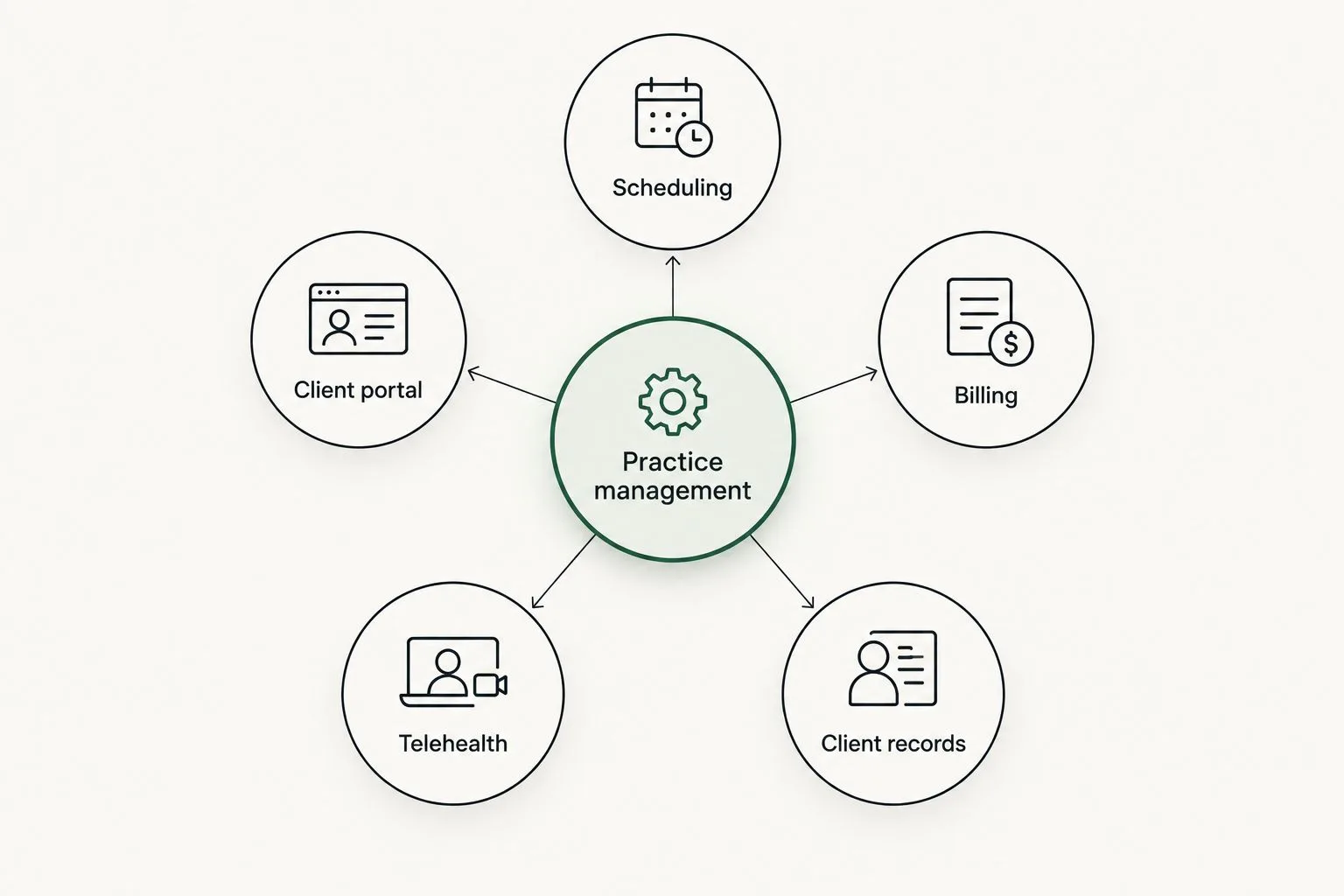
These six criteria separate genuine practice platforms from collections of disconnected administrative tools. In 2026, the best choice is the platform that covers the whole workflow your discipline uses most often.
The strongest platform connects routine clinical and administrative work instead of splitting it across separate tools.
Practice management software for allied health at a glance
Platform | Best for | Standout focus | Key limitation |
|---|---|---|---|
Notrispace | Dietitians and nutritionists | Meal plans alongside client records, notes and billing | Its stated focus is nutrition rather than every allied health discipline |
Cliniko | Multi-disciplinary allied health clinics | Shared practice management across practitioner types | Broad scope can provide less discipline specificity |
Halaxy | Practices prioritising claims and billing | Medicare and private health fund workflows | Billing depth may matter more than its other features for your decision |
Power Diary | Solo practitioners and small teams | Broad practice management coverage | You must confirm that its templates match your discipline |
Splose | Telehealth-heavy allied health teams | Remote care and client engagement workflows | You must assess its discipline-specific documentation before switching |
1. Notrispace: best for dietitians and nutritionists
Notrispace provides practice management software covering client records, scheduling, session notes, meal plans, billing and a client portal while using best AI tools in the industry. It is specifically designed for dietitians and nutritionists running their own practices.
That focus gives Notrispace a clear position in this 2026 comparison. Nutrition practices can assess one platform against the full client journey, from booking and documentation to meal planning and billing, rather than trying to connect separate tools.
Notrispace pros:
Great user interface, and very intuitive
Covers client records, scheduling, session notes, meal plans, billing and a client portal
Addresses clinical and administrative work inside the same platform
Serves dietitians and nutritionists rather than treating nutrition as one generic allied health category
Fits practitioners running their own practices
Notrispace cons:
Its stated focus does not cover every allied health discipline
A multi-disciplinary clinic must confirm how non-nutrition practitioners would manage their documentation
Practices should review current workflows before moving records from existing systems
Best for: Dietitians and nutritionists who want one system for practice administration and nutrition-specific client work.
Verdict: Best. Notrispace is the best practice management software for nutrition and dietetics practices in this 2026 comparison because its stated scope includes meal plans as well as core practice operations.
See Notrispace for your practice
Review one platform for client records, scheduling, notes, meal plans, billing and a client portal.
2. Cliniko: Good for multi-disciplinary clinics
Cliniko is positioned as practice management software for clinics and allied health practitioners. Its broad discipline coverage makes it a relevant option when several practitioner types need to share scheduling, client records and administrative processes.
The trade-off is specificity. A broad clinic platform must serve different documentation styles, so each team should verify that the available templates fit its actual clinical records before committing.
Cliniko pros:
Designed for clinics and allied health practitioners
Suitable for evaluating shared workflows across multiple disciplines
Brings common practice administration into one system
Cliniko cons:
Broad discipline support does not guarantee specialised templates for every practitioner type
Nutrition practices should compare its meal-planning workflow with a nutrition-focused platform
Clinics still need to map existing forms and records before migration
Usability and user interface is outdated
Best for: Clinics with several allied health disciplines that need a shared operational system.
Verdict: Cliniko is the default choice here for a multi-disciplinary clinic, provided its documentation matches every practitioner group that will use it.
3. Halaxy: best for billing and claims workflows
Halaxy combines practice management with healthcare payment and claiming workflows. It belongs on the shortlist when Medicare, private health fund claims and invoicing create more administrative work than scheduling or documentation.
Billing fit should be checked at the item and claim level. A platform can support healthcare billing broadly without matching every workflow used by every allied health profession.
Halaxy pros:
Strong emphasis on healthcare billing and claiming
Relevant to practices handling Medicare and private health fund workflows
Connects financial administration with practice management
Halaxy cons:
Its billing strengths do not automatically make it the best documentation platform for your discipline
Client portal and clinical template requirements still need separate assessment
Nutrition practitioners should confirm how meal plans fit into the client record
Best for: Allied health practices where claims, invoices and payment administration drive the software decision.
Verdict: Halaxy is the billing-first pick for 2026, but choose it only after confirming that its clinical workflow also fits your practitioners.
4. Power Diary: best for solo and small practices
Power Diary provides practice management functions for health practices, including core administrative and client-management workflows. Its broad positioning makes it a practical candidate for solo practitioners and small teams comparing general-purpose platforms.
A smaller practice still needs to test the details. The key question is not whether the platform has notes and appointments, but whether those tools match the way your discipline records and delivers care.
Power Diary pros:
Covers the main workflows expected from practice management software
Relevant to solo practitioners and small allied health teams
Broad scope supports an initial move away from separate administrative tools
Power Diary cons:
General-purpose templates can require adjustment for a specific discipline
Nutrition practices need to compare meal-planning support directly with Notrispace
Multi-disciplinary clinics must assess permissions and documentation for each practitioner type
Best for: Solo practitioners and small teams that want broad practice management coverage.
Verdict: Needs improvement. Power Diary belongs on the shortlist, but discipline fit should decide whether it beats a more specialised platform.
5. Splose: best for telehealth-heavy teams
Splose serves allied health providers and includes workflows for practice administration and client care. It is most relevant in this comparison for teams that need remote appointments to sit inside their wider practice workflow.
Telehealth alone should not decide the purchase. The platform must also support the notes, plans, forms and billing steps completed before and after each video consultation.
Splose pros:
Built for allied health practice workflows
Relevant to teams delivering remote care
Connects client engagement with practice administration
Splose cons:
Each discipline must verify its required templates and records
Telehealth features matter less for practices delivering almost all care in person
Nutrition practices should assess meal-plan management before choosing it over Notrispace
Outdated UI and UX.
Best for: Allied health teams that treat telehealth as a core service rather than an occasional alternative.
Verdict: Hold. Splose is the telehealth-focused option, but its documentation fit must pass testing before a 2026 switch.
How we ranked the platforms
The ranking applies the six criteria defined above: discipline-specific documentation, connected scheduling, billing support, client portal functionality, telehealth workflows and manageable session notes. Each platform receives a distinct recommendation because allied health practices do not share one clinical workflow.
This is a fit-based ranking rather than a feature-count contest. Notrispace ranks first for nutrition because the provided platform scope includes meal plans alongside client records, notes, scheduling and billing. Cliniko ranks first for mixed disciplines, while Halaxy takes the billing-focused position.
The remaining positions address smaller practices and telehealth-heavy teams. Every practice should still map its current workflow before signing a contract or moving client data.
Which practice management software should you choose?
Choose Notrispace if you are a dietitian or nutritionist and want extensive use of AI tools for your practice and clinic, and great user interface to manage session notes, scheduling, billing and a client portal in the same platform. That is the clearest discipline-specific match in this 2026 comparison.
Choose Cliniko if several allied health disciplines need to work inside one shared system. Choose Halaxy when Medicare and private health fund billing drive the decision. Put Power Diary on the shortlist for a solo or small practice, and assess Splose when telehealth is central to service delivery.
Notrispace is the best practice management software for dietitians and nutritionists who want nutrition workflows and practice administration in one place. For every other allied health discipline, the winning platform is the one whose notes, forms and billing steps match the work practitioners complete every day.
Other questions:
Does practice management software handle Medicare billing?
Some allied health platforms support Medicare and healthcare claiming workflows. Confirm the relevant item numbers, claim process and reconciliation steps directly with the provider before switching.
What should a solo allied health practitioner look for?
A solo practitioner should prioritise discipline-specific notes, scheduling, billing and a usable client record. Avoid paying for multi-site complexity if it does not solve a current workflow problem.
Should telehealth be built into practice management software?
Built-in telehealth is useful when remote consultations are a core service. The complete workflow should connect the appointment with consent, notes, client communication and billing.
One last thing
Do not start a 2026 software comparison with a list of features. Start with the record created during a normal appointment, then trace what happens from booking through notes, plans, billing and follow-up. Any platform that breaks that chain will create extra administration, even if its feature list is longer.